Tag: collaboration

  • Innovation in Engineering Education – The Diamond – Twelve Architects

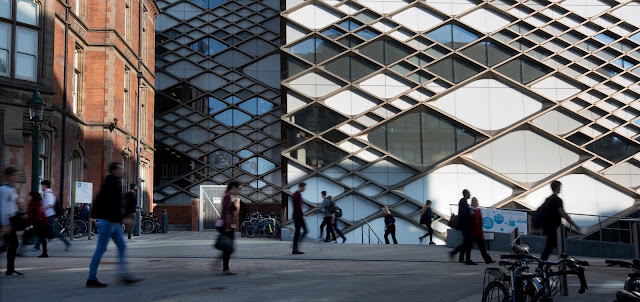
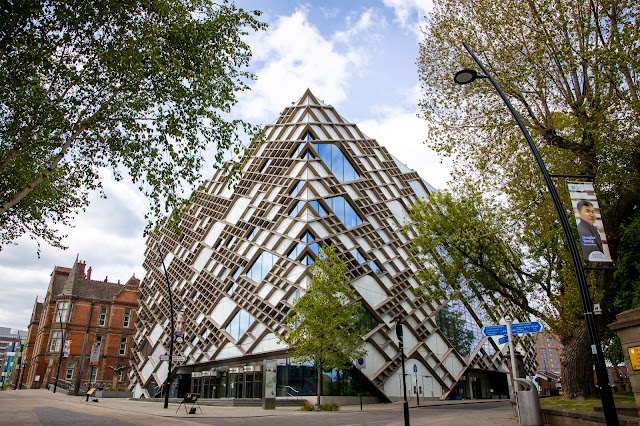
    Exterior of the diamond building

    The conception of the Diamond Building was a huge project here at Sheffield Engineering that aimed to make a world leading space for Engineering teaching. It is the home of  high quality teaching labs for all the engineering disciplines, as well as innovative teaching and study space. It is a wonderful space to be in and remains as popular as ever with students. The building led to the creation of a specialist multidisciplinary team to deliver and coordinate the teaching that takes place in it, and they continue to lead innovation in teaching and learning and are core contributors to the Centre for Engineering Education. This wouldn’t have been possible without the team who built the Diamond, Twelve Architects. They made the space both iconic and great for teaching, something that is often overlooked, but that has a huge impact on learning and learners. In this post Twelve Architects share their perspective of the project.

    study space in the diamond building

    September 2025 marked ten years since the opening of The Diamond at the University of Sheffield, a landmark project that continues to inspire over a decade on. As our first completed UK building, The Diamond was a defining moment for Twelve Architects, setting the tone for our approach to design, collaboration and innovation.

    Reflecting on this milestone, we asked members of the original design team, Matt Cartwright and Lorraine Stoutt Griffith, to share their experiences of working on the building that helped to shape our future as a practice.

    Designed to transform the way engineering was taught at the University, The Diamond brings together multiple disciplines under one roof, creating a flexible, future-focused environment that encourages interaction, learning and discovery. Ten years later, the building remains one of the UK’s most advanced teaching and research facilities, and one we’re immensely proud to have worked on.

    “The atrium remains one of the building’s most uplifting surprises,” recalls Lorraine. “It’s open, light and full of character, with a variety of places to spend time or work. We painted the steel structure orange to reveal how the building works. It’s a detail that makes it particularly special for the structural engineers who use it.”

    Behind the building’s confidence lies the complexity of its delivery. From the organically shaped windows to the curved pod walls, every detail required careful coordination. “It wasn’t without its challenges,” says Lorraine, “but the ambition and commitment across the team made it possible. Seeing it now, still thriving and crowded with students, makes it all worthwhile. It set a great standard for the student experience.”

    For Matt, the project carries a deep personal significance. “The vision was to create a landmark building that would attract students and staff, and support the University in becoming one of the leading engineering faculties in the UK and internationally,” he reflects. “The project was founded on trust, hard work and a collective desire to succeed. When challenges arose, we found solutions together, a rarity that shaped my belief in the power of collaboration.”

    Years later, The Diamond remains one of the UK’s most advanced and well-used engineering facilities, a space that is both functional and inspiring. Matt adds. “My parents met as students at the University of Sheffield. To have designed a building that continues to inspire future generations is priceless.”
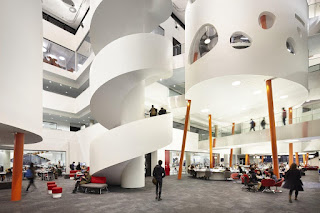
    spiral staircase in the diamond building

    Looking back, both Lorraine and Matt agree that The Diamond exemplifies the values that continue to guide Twelve’s work today: trust, ambition, quality and collective strength.

    “Be ambitious,” says Lorraine. “Bring the team with you, client, users, engineers, contractors, and maintain the quality of materials. It was a struggle to keep the cladding anodised, but seeing it now, it was absolutely the right decision.”

    “Trust, ambition and a clear vision,” echoes Matt, “are the lessons that we have carried through to every project since.”

    The Diamond continues to stand as a testament to design excellence, innovation and collaboration, and as a project that will always hold a special place in our hearts.

    When citing this work, please use the following citation:

    Hearne, B. (2025). “Ten Years of The Diamond – Twelve Architects”. Centre for Engineering Education Blog, The University of Sheffield, Sheffield, UK. January 2026. https://ceesheffield.co.uk/2026/10/27/innovationinengineeringeducation/
  • Bridging two worlds: how design-based research can connect engineering problem-solving with educational research

    Bridging two worlds: how design-based research can connect engineering problem-solving with educational research

    As engineers and scientists venturing into educational research, many face a familiar challenge: how do we apply our systematic, problem-solving mindset to the complex, human-centered world of education? If you’ve ever felt caught between the quantitative precision of engineering and the qualitative nuances of educational research, you’re not alone. Here, Edmund Padget shares his experience bring disciplinary thinking together.

    I studied physics for my first degree, but when I started teaching, and reflecting on how to do it better, the engagement  with educational research often made me feel alienated in my approach to problem-solving, rather than inspired to do educational research myself. It seemed to me (rightly or wrongly!) that most papers fell into one of these two categories:

    • What looked like very complex philosophy/sociology papers – I did enjoy the complexity of them and the theoretical development, but it felt like solving a sudoku when the house was on fire.
    • What looked like simple “what works” solutions – the simplicity of both the language and the ideas was very tempting, but I was apprehensive about the approaches that simultaneously  ignored too many variables and were very context-dependent. Not to mention misuse of statistics!

    I then started my doctoral studies, and the question of methodology became very real: I wanted to find out how the design of teaching and learning resources can support less experienced teachers in their planning and delivery, but I wanted to contribute more than a simple case study.

    This is where I came across the design-based research (DBR), which I believe may encourage many more engineering educators into conducting educational research.

    What is design-based research?

    Design-Based Research is an iterative research methodology that combines the systematic approach engineers use with the contextual sensitivity that educational research demands. Think of it as the engineering design process applied to educational challenges, but with the rigor of academic research woven throughout.

    At its core, DBR involves:

    • Identifying a real educational problem (like we identify engineering challenges)
    • Understanding the problem and its complexity
    • Designing an intervention (our prototype solution)
    • Testing it in authentic settings (real classrooms, not labs)
    • Iterating based on evidence (continuous improvement)
    • Generating both practical solutions and theoretical insights

    DBR has an explicitly dual focus on both providing an applicable solution to a real problem, and advancing theoretical understanding. It also underlines the importance of an in-depth, multifaceted understanding of the initial problem, which I found particularly appealing, as Pólya’s “How to solve it” has underpinned most of my conceptual thinking, in physics and elsewhere.

    What makes DBR particularly suited to engineering education?

    It’s iterative and improvement-focused: just as we prototype, test, and refine our engineering designs, DBR embraces the iterative cycle. There’s no expectation of getting it “right” the first time – instead, each iteration builds on evidence from the previous cycle.

    It solves real problems: unlike some educational research that can feel abstract, DBR always starts with a genuine problem that needs solving. Whether it’s improving student engagement in thermodynamics or developing better lab safety protocols, DBR keeps us grounded in practical impact.

    It values multiple types of evidence: while we might be used to quantitative data, DBR recognises that educational contexts require multiple lenses. Student interviews, classroom observations, and learning analytics all contribute to understanding what works and why. Additionally, other teachers we work with can be co-designers in the solution design process, which in turn helps us build communities of research-informed teaching practice.

    It produces actionable outcomes: DBR doesn’t just generate papers – it creates tested interventions that other educators can implement and adapt. It’s research with immediate practical value.

    But isn’t it just problem solving?…

    Since it is a relatively new methodology (well, 30+years old!….) that is still inventing itself, it has its critics who question whether DBR indeed generates valid knowledge. The discussion of such validity warrants a separate blog post, but papers using DBR have been published in key engineering education journals, and produced some very interesting findings: about broadening participation in pre-college engineering, about preparing students for addressing “wicked problems”, about online engineering education, about supporting undergraduate group projects, about  developing digital resources for labs, about learning interdisciplinary thinking. This small sample of what’s “out there”  should give you an idea for what’s possible.

    And this systematic review of DBR research in engineering education offers even more examples!

    How do I do it?

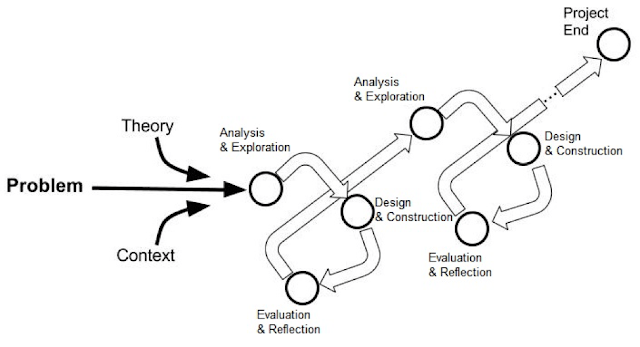
    If you’re intrigued by DBR, here is a handy diagram to illustrate the DBR process:

    A flow chart of the iterative Process of design-based research
    Source: https://edtechbooks.org/studentguide/design-based_research (under a CC BY license)

    And here are some practical first steps:

    • Start with a problem you genuinely care about –  what educational challenge keeps you up at night?
    • Think intervention, not just investigation – how might you design a solution worth testing?
    • Plan for iteration – build time and resources for multiple cycles of testing and refinement.
    • Embrace mixed methods – combine the quantitative skills you have with qualitative approaches that capture context.
    • Document everything – your “failures” are as valuable as your successes for building understanding, and reporting negative findings is one of the ways in which DBR protects its academic validity.

    Design-Based Research isn’t just another methodology – it’s a bridge between the systematic thinking that makes us good engineers and the contextual awareness that makes for good educational research. It honours our problem-solving instincts while pushing us to consider the human complexities that make education so fascinating and challenging.

    As our field continues to evolve, we need research approaches that can keep pace with the complexity of modern engineering education. Design-Based Research offers us a way forward that’s both methodologically sound and practically meaningful – exactly what we need as we work to improve how we teach and learn engineering.

    There are colleagues at CEE interested in this methodology, so do reach out to talk about collaboration!

    Further readings:

    Kelly, A.E. (2015). Design-based research in engineering education: Current state and next steps. In Cambridge Handbook of Engineering Education Research (pp. 497-518). Cambridge University Press. DOI: 10.1017/CBO9781139013451.032

    Hjalmarson, M. A., & Parsons, A. W. (2020). Conjectures, cycles and contexts: A systematic review of design-based research in engineering education. Studies in Engineering Education, 1(2), 142-155. DOI: 10.21061/see.35

    Minichiello, A., & Caldwell, L. (2020). A narrative review of design-based research in engineering education: Opportunities and challenges. Studies in Engineering Education, 1(2), 31-54. DOI: 10.21061/see.15

    Kolmos, A. (2015). Design-based research: A strategy for change in engineering education. In International Perspectives on Engineering Education (pp. 373-392). Springer. DOI: 10.1007/978-3-319-16169-3_18

    When citing this work, please use the following citation:

    Padget, E. (2025). “Bridging two worlds: how design-based research can connect engineering problem-solving with educational research”. Centre for Engineering Education Blog, The University of Sheffield, Sheffield, UK. November 2025. https://ceesheffield.co.uk/2026/10/29/bridging-two-worlds-how-design-based-research-can-connect-engineering-problem-solving-with-educational-research/

  • Open Educational Resources (OER) in Engineering at Sheffield

    Why make education openly accessible? Don’t worry, Tom Howard will help us by explaining it’s about equity and quality.

    Why Make Education Openly Accessible?

    The benefits of using Open Educational Resources (OER) for teaching and learning in Higher Education are well established [1]. The key benefit to learners is the unrestricted (and zero-cost) access to learning materials, regardless of age, geographic location or economic situation. There is evidence to suggest that students perform better when enrolled on courses that make more extensive use of OER too [2].

    There are many benefits to HE institutions as well, the obvious one (again) relates to economics: moving away from high (and ever increasing) cost, subscription-based journals to open access alternatives is a significant cost saving. But there are other important benefits: making educational resources openly available for all can help to showcase the teaching that a University provides, and helps to promote institutional reputation.

    There are also considerable benefits for teaching staff. OER can help to ease workload pressures since instructors can take existing open resources and either use them as-is, or adapt them to their own needs, rather than having to re-invent the wheel and write materials from scratch. Material created or adapted by instructors can help to promote individual reputation too.

    What are we doing at Sheffield

    In light of all these benefits, in December 2022, the University of Sheffield established new policy to encourage the use and creation of OER by university staff. In Engineering, we are really keen to engage with this, and it’s become one of the key themes of the Centre of Engineering Education (CEE). We believe that we can provide a unique take on it: Practical Engineering.

    We’re fortunate to have the Diamond, the home of practical teaching for the Engineering Faculty. We believe that the teaching that we develop here is unique and exciting. As such, we want to share this with the wider community to showcase what we do, to promote the great work of our staff, and to enthuse prospective students by giving them an insight into what a degree in Engineering at the University of Sheffield will be like.

    How are we achieving it?

    In order to support this, one of the key things we have done is to put together a website to showcase the open access educational materials currently produced by staff across the Engineering Faculty: https://sites.google.com/sheffield.ac.uk/open-eng

    Open Educational Resource showcase webpage

    We really want to see this grow, and we are promoting this across the faculty and encouraging staff to contribute as much as they can of their own work. We’re also promoting the idea of OER more generally, and encouraging staff to think about how they could use OER in their own teaching (and why it’s beneficial).

    One of the key issues around OER relates to perceived quality [3]. We are (of course) confident that the resources that we create here at Sheffield are of high quality, but how do we convince others of this? Having the University Logo attached to the site helps with this, and we are fortunate to be part of an institution with a good reputation, but there is certainly more that we must do to guarantee and assure readers of the high quality of each and every resource that we share.

    In academia we are very familiar with the concept of peer review, yet often in the context of OER this simply isn’t feasible [4]. There are various other techniques we can employ to help with this though. Each resource on the site includes the name of the primary author, and a link to their University profile page. Through this, viewers can view our academic credentials, to provide confidence that we are qualified to write about and teach a given subject.

    Please help us!

    Ultimately, the most effective way for us to demonstrate quality in our resources is through user feedback. And that’s where you come in!

    The site includes a mechanism for user reviews, and we would really value any feedback that anyone may have on any of our resources. Any review is of huge value, but particularly those from other qualified authors (both internal and external to the university) would be really valuable to us.

    Please browse our resources and provide us with feedback if you can. Ultimately an OER is never really final. We want to make sure our teaching is as good as it can be, and would welcome any suggested improvements. And finally, if you make use of any of our resources for your own teaching or learning then please let us know!

    When citing this work, please use the following citation:

    Howard, Tom. (2025). “Open Educational Resources (OER) in Engineering at Sheffield”. Centre for Engineering Education Blog, The University of Sheffield, Sheffield, UK. October 2025. https://ceesheffield.co.uk/2026/10/29/open-educational-resources-oer-in-engineering-at-sheffield/

    [1] Swain, B.K., Pathak, R.K (2024). Benefits and challenges of using oer in higher education: a pragmatic review. Discov Educ 3, 81. https://doi.org/10.1007/s44217-024-00142-6

    [2] Kit W. Cho, Vahe Permzadian (2024). The impact of open educational resources on student achievement: A meta-analysis. International Journal of Educational Research 126. https://doi.org/10.1016/j.ijer.2024.102365.

    [3] Anderson, T., Gaines, A., Leachman, C., & Williamson, E. P. (2017). Faculty and Instructor Perceptions of Open Educational Resources in Engineering. The Reference Librarian 58(4), 257–277. https://doi.org/10.1080/02763877.2017.1355768.[4]

    C. M. Kelty, C. S. Burrus and R. G. Baraniuk (2008). Peer Review Anew: Three Principles and a Case Study in Postpublication Quality Assurance. Proceedings of the IEEE 96(6) https://doi.org/10.1109/JPROC.2008.921613. 

  • From Sheffield to India: Expanding Makerspace Partnerships and Engineering Education

    From Sheffield to India: Expanding Makerspace Partnerships and Engineering Education

    During a recent visit to India, Dr Pete Mylon explored new partnerships with leading institutions, sharing insights on student-led makerspaces like the iForge in Sheffield and practical learning. In this blog, he reflects on his experience and the exciting opportunities ahead, and how international collaboration is key to advancing engineering education.

    Mumbai and IITs

    The first order of business was to meet Hemant Kanakia, Chair of Maker Bhavan Foundation (MBF), who fund and support makerspaces at Higher Education Institutes across India. We have been developing an idea for an international student competition that will capitalise on the makerspace facilities now available at many institutions and allow for an exchange of ideas between students from different contexts.

    Together, I travelled with Hemant to IIT Bombay. The IITs were established in the 1950s and 60s and are amongst some of the top institutions globally for Engineering. Sheffield has formed a strategic partnership with IIT Bombay, and so I was able to apply to the Partnership Development Fund to support this collaboration.

    At the campus, I met with Siddarth Tallur, who oversees their electronics makerspace, and Pratik Mutha from IIT Gandhinagar, who is in charge of the makerspace there.

    workshop activity

    It was great to share our experiences and to see many similarities in the challenges we faced, and there was much enthusiasm for a collaborative competition.

    Having successfully run Hackcessible at Sheffield for a number of years, and with assistive technology also an area of interest for a number of academics in the IITs, we decided on this as a theme and discussed some ideas for the logistics, with the intention for students from India to visit the UK and vice versa. We left with actions to follow up with our own institutions to firm up timings and funding, but mainly with excitement about the potential for all of our students to have an enriching experience.

    While there, I looked around the Experiential Learning Lab (ELL), a curricular makerspace for EEE students, where they have made some great creative mechatronic projects.

    Table with tools on

    I met a couple of their technical staff who had come to Sheffield for ISAM and were really impressed with the iForge facilities. I was also able to speak to some of their students about their experiences. At the end of the afternoon, I headed to the airport, bound for Delhi.

    Delhi

    In Delhi, I had arranged some meetings at IIT Delhi and with MBF directors and donors but had a free day beforehand. So, I arranged with the University of Sheffield’s India office to visit some ‘counsellors’—agents who support Indian students applying to Sheffield and other international institutions. We briefed counsellors, outlining Sheffield’s USP as a practical Engineering experience and what the Diamond facilities, iForge, and co-curricular activities offer students. There was particular interest in Aerospace Engineering, with India having recently made advances in their national space programme, and students were excited by the achievement of Project Sunride.

    Hemant Kanakia had arranged for us to meet Jay Dhariwal, Director of the IIT Delhi Makerspace, and next on the itinerary was a visit to his maker space and some of his staff.

    They were to be found in a brand new building and are in the process of growing a student community by running workshops, but were keen to learn about student-led makerspaces and how the iForge in Sheffield runs.

    Laser cutter

    Jay said, “It was good to learn from you about how the student-led makerspace came about and is running well at your university, the importance of community building, having flavours of creative explorations and problem-solving at your Makerspace, and all the exciting projects that the student clubs are building at the University of Sheffield—from rocketry to biomedical devices to projects in the sustainability realm and more.”

    Mumbai

    Pete Mylon with a Mumbai academic

    In Mumbai we connected with a delegation from Sheffield that included academics from Engineering and the Vice Chancellor. We visited IIT Bombay to strengthen the strategic partnership we have built and met with a number of academics, including IIT Bombay’s Director.

    Whilst there, I also managed to see another couple of makerspaces—the main ‘MakerSpace’ runs introductory courses for over 1400 students who make projects like drones and line follower robots, but is more akin to our taught Diamond laboratories.

    The Tinkerers’ Lab, funded by MBF, has more of a student-led feel, although it is supervised by technical staff. Students are free to work on whatever projects they like, either for curriculum work or personal projects.

    Group picture of students and Pete Mylon in a workshop

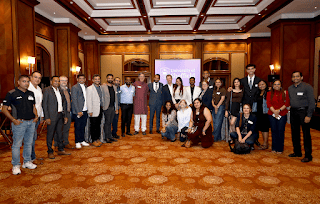
    It was great to connect with Damayanti Bhattacharya, MBF’s CEO, and chat about their vision to see makerspaces established in many more HEIs.The trip ended at the Taj Lands End, overlooking the Arabian Sea, for a University of Sheffield alumni reception, hosted by the VC and organised by Hayley Chalmers from CAR. It was great to chat with alumni and supporters of the University and help to maintain a strong alumni community.

    Group picture of Indian delegation

    Now the real work begins as I work on the partnerships developed during the trip, and there should be a number of exciting collaborations over the coming months!

    When citing this work, please use the following citation:
    Mylon, P (202). “
    From Sheffield to India: Expanding Makerspace Partnerships and Engineering Education” Centre for Engineering Education Blog, The University of Sheffield, Sheffield, UK. March 2025. https://ceesheffield.co.uk/2026/10/29/from-sheffield-to-india-expanding-makerspace-partnerships-and-engineering-education/

  • Let’s Talk Labs: Making Practical Learning Work for Everyone

    Let’s Talk Labs: Making Practical Learning Work for Everyone

    Ever felt like a lab session dragged on forever, or that you were just another face in a crowded room? A new study by Stephen Beck, Panos Lazari, and Matteo Di Benedetti from the University of Sheffield’s Faculty of Engineering has been exploring exactly that. Their research, published in the International Journal of Mechanical Engineering Education, sheds light on what truly enhances lab experiences for both students and staff. Their findings offer valuable insights worth considering.

    What Do Students Really Want from Labs?

    The team set out to understand how to make lab sessions more effective. They collected extensive feedback through questionnaires, focusing on two key aspects: the ideal duration of lab sessions and the optimal group size for collaboration. Their findings highlight a few crucial ways to improve lab organisation.

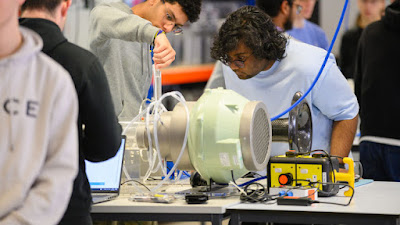
    Students in a Thermodynamics lab

    One of the most striking results was that students prefer shorter lab sessions. Just like attention drifts in lectures after about 20 minutes, lengthy lab sessions can lead to disengagement.

    The study suggests that two hours is the ideal maximum duration. Interestingly, students who enjoy labs are happy with the current length, while those who don’t would prefer shorter sessions.

    When it comes to group size, smaller is better. Both students and staff favour working in pairs. While some staff members find groups of three acceptable, students are less enthusiastic. The study found that groups of three tend to be less effective, possibly because one person may be left out. Groups of two or four seem to work best, likely depending on the experiment and equipment required. Notably, students who enjoy labs prefer smaller groups, while those who don’t tend to prefer larger groups. This highlights the importance of ensuring all students are actively engaged in the work.

    The Number of Labs: Quality Over Quantity?

    Surprisingly, most students are satisfied with the number of labs they have. Those who enjoy practical work would like more labs, while those who don’t would prefer fewer.

    Interestingly, some students who dislike labs still want more, possibly because they recognise their importance in engineering education. This suggests that the number of labs isn’t necessarily linked to whether students enjoy them.

    The study also highlights that group size should be flexible depending on the experiment and the level of the course. A one-size-fits-all approach may not be the best solution.

    What Does This Mean for Educators?

    It’s time to rethink how labs are structured. The key takeaways for educators are:

    1. Consider shorter lab durations, aiming for a maximum of two hours. Favour smaller groups, ideally pairs, but be flexible depending on the experiment.
    2. Ensure all students are actively engaged, avoiding group sizes where one person might be left out.
    3. Avoid reducing learning when reducing lab time or group sizes. Since lab duration and group size are resource-dependent, shortening sessions should be carefully managed to maintain educational value.

    Beck, Lazari, and Di Benedetti also examined ways to make lab time more efficient. One key recommendation is effective pre-lab activities to maximise hands-on time. Educators should also consider whether repetitive tasks are necessary and explore alternative methods like data pooling, allowing all students to fully participate. When expensive equipment is involved, a rotation system might be beneficial—letting one group use the resources while another discusses results with staff.

    The researchers even provide a practical equation explaining the relationship between lab duration, group size, and resource availability.

    The bottom line? Shorter labs with smaller groups can be just as effective as longer labs with larger groups while providing a better student experience.

    This study is a call to action for educators to rethink lab sessions, ensuring they are structured for maximum impact and engagement.

    You can check out the full paper by Beck, Lazari, and Di Benedetti here:

    Beck SB, Lazari P, Di Benedetti M. Lab group size and laboratory duration. International Journal of Mechanical Engineering Education. 2025;0(0). doi:10.1177/03064190251315693

    When citing this work, please use the following citation:
    Beck, S. Di Benedetti, M (2025). “
    Let’s Talk Labs: Making Practical Learning Work for Everyone” Centre for Engineering Education Blog, The University of Sheffield, Sheffield, UK. February 2025.

  • A Cathedral to Engineering Education: The Diamond Building

    A Cathedral to Engineering Education: The Diamond Building

    Exterior of the diamond building

    Twelve Architects, who worked closely with engineers and University of Sheffield stakeholders to design and deliver The Diamond building, have taken the opportunity to reflect on what The Diamond has become and what it has meant to those who use it.

    More than a decade after its completion, The Diamond at the University of Sheffield continues to stand as a symbol of innovation in engineering education, and a career-defining project for many of those involved in its creation. As part of our ten year celebration, we asked members of the original client team to share their reflections on the building.
    For

    Stephen Beck, Professor of Mechanical Engineering at the University of Sheffield, The Diamond has had a profound and measurable impact on the Faculty and its students.

    “It has allowed us to double the size of the student cohort and helped position us as leaders in engineering education,” he reflects. “I show visitors around and say, ‘This is the best practical education environment in the world’ and I’ve never been contradicted.”

    From the outset, the design of The Diamond encouraged collaboration and cross-disciplinary learning, creating spaces that inspire both staff and students. Stephen Beck describes the experience of being part of the project as deeply rewarding: “It was great to be part of a team where each member used their skills to deliver a world-leading facility for engineering education. It’s certainly been a high point of my career. Truly career defining.”

    “It is a cathedral to engineering education”

    Professor Mike Hounslow, former Pro-Vice-Chancellor for Engineering at the University and often described as the “father of the project”, recalls how the building has shaped the University’s academic landscape: “We’ve seen growth in student numbers, an improvement in the student experience and a rise in educational aspiration,” he explains. “The building encouraged student-led activity and created a culture of openness and innovation. It’s a cathedral to engineering education.”
    Reflecting on the decade since its opening, he adds: “Its impact has only become more positive over time. It’s an iconic, open, and practical space that continues to define what engineering education can be.”

    “The building of choice”

    For Keith Lilley, former Director of Estates at the University, The Diamond has always been “the building of choice”. “The building was full from day one,” he recalls. “It immediately became the go-to place for student study, so popular that the growth plan was realised straight away.”

    Despite challenges during planning and construction, he describes the project as having a “lasting legacy”. “The Diamond was hard won, with planning hurdles and construction challenges, but it proved to be the most popular building with students. It undoubtedly contributed to the success of the Faculty of Engineering as a whole and remains a premium facility in UK higher education.”

    Today, The Diamond continues to feature prominently in the University’s promotional material, celebrated as a defining space for learning and collaboration. “It’s incredible,” he adds. “The building remains a lasting legacy, not only for the University but for everyone who worked on it.”

    A decade after its opening, The Diamond continues to embody the ambition and collaboration that brought it to life. Its success has paved the way for new approaches to education, inspiring similar developments across the UK and beyond.

    When citing this work, please use the following citation:

    Hearne, B. (2025). “A Cathedral to Engineering Education: The Diamond Building 10 Years”. Centre for Engineering Education Blog, The University of Sheffield, Sheffield, UK. December 2025. https://ceesheffield.co.uk/2025/02/16/a-cathedral-to-engineering-education-the-diamond-building/

  • Introducing Practice Exchange & Partnerships

    The Centre for Engineering Education (CEE) supports, promotes, and celebrates the outstanding teaching within the Faculty of Engineering. Laura Neasmith introduces an exciting new initiative designed to connect our experts with external organisations. Read on to discover how Practice Exchange and Partnerships are set to empower our community and further enhance our commitment to excellence in engineering education.

    At the Centre for Engineering Education (CEE) in the Faculty of Engineering, we’re all about supporting teaching staff and Graduate Teaching Assistants (GTAs) to deliver exceptional teaching and create a fantastic student experience. Our goal? To make Sheffield an acknowledged leader in engineering education.That’s why we’ve evolved our approach to external engagement into something more powerful: Practice Exchange & Partnerships. Through this work, CEE connects educators, researchers and external partners to share ideas, test new approaches and shape the future of engineering education together.

    Whether you’re looking for a keynote speaker, an expert advisor, or a partner for educational innovation, CEE can help you connect with the right people across the Faculty of Engineering.

    What is a Practice Exchange?

    Practice Exchange is at the heart of what we do. It creates space for educators to learn from one another — within Sheffield and beyond — by sharing real teaching challenges, emerging ideas and practical innovations.

    These exchanges can take many forms:
    from visiting speakers and informal discussion events, to joint workshops, international visits and longer-term collaborations that lead to new projects and research.

    The aim is simple but powerful: to bring people together around teaching practice, so that new ideas can be explored, refined and taken forward in a supportive, open environment.

    Practice Exchange in Action: Building connections

    Back in 2025, CEE launched a collaboration with Sheffield Hallam University to bring together engineering educators from across the city.

    Two informal Practice Exchange events created space for colleagues to share teaching ideas, explore common challenges and learn from one another. The first, hosted in The Diamond, featured short talks on topics including bioengineering labs, spreadsheet-based finite element analysis, inclusive teamwork and Multidisciplinary Engineering Education Project Weeks. These sparked lively conversations about how similar approaches could work in different contexts.

    A reciprocal event at Sheffield Hallam continued the dialogue, introducing ideas such as low-fidelity simulations for lab preparation and digitally enhanced learning activities.

    Participants valued the chance to meet peers working on similar problems and to build relationships beyond their own institutions — showing how powerful early-stage sharing can be in generating new collaborations and fresh approaches to teaching.

    CEE also hosts international Practice Exchange visits. Again in 2025, the Centre welcomed Dr Darson Li from the University of New South Wales for a two-day exchange focused on engineering education and curriculum innovation.

    During his visit, Dr Li met educators from across the Faculty and explored how teaching and learning happens in The Diamond — from design and make spaces to aerospace projects and engineering design teaching. These conversations allowed both sides to compare approaches and identify shared interests.

    He also delivered a well-attended EATS lunchtime seminar on using file metadata to help detect plagiarism, sparking new discussions and opening up future collaborative opportunities. Follow-up conversations are already under way, with plans for joint educational research and further exchanges.

    Our Specialist

    CEE works with a wide network of education-focused staff across the Faculty, including:

    • Principal Fellows of the HEA
    • National Teaching Fellows
    • Academic leads in engineering education
    • Specialists in curriculum design, assessment, inclusion and digital learning

    Together, this community brings deep expertise in how engineering is taught, learned and experienced by students

    Why This Matters?

    Engineering education is changing fast — with growing emphasis on hands-on learning, inclusive practice, digital innovation and strong links between universities and industry.

    Practice Exchange & Partnerships helps Sheffield stay at the forefront of those changes by creating meaningful connections that lead to better teaching, stronger curricula and richer student experiences.

    If you’re interested in collaborating, learning from our educators, or exploring what a partnership might look like, we’d love to hear from you.

    Contact us at: cee@sheffield.ac.uk

    When citing this work, please use the following citation:

    Neasmith, L. (2025). “Introducing Practice Exchange and Partership”. Centre for Engineering Education Blog, The University of Sheffield, Sheffield, UK. October 2025. https://ceesheffield.co.uk/2026/10/29/introducing-practice-exchange-partnerships/