Tag: learning

  • From Red Line Week to Engineering Education Scholarship Week: Why Taking Time Out Matters

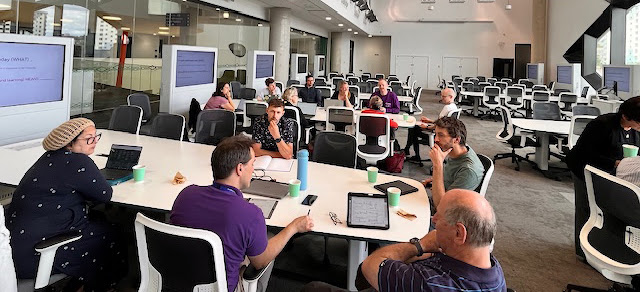
    University of Sheffield staff attending a Engineering Education session

    The Centre for Engineering Education is an initiative to support the educational aims of Engineering at The University of Sheffield, and open to all, and especially the many and varied people who support these aims. In this post Emma Kenny-Levick, a Senior Administration Officer at The University of Sheffield and super power behind the CEE blog, shares how scholarship led her to challenge her assumptions, and to make time for reflection that changed on her own practice.

    When I first joined Multidisciplinary Engineering Education (MEE), a recurring block of events appeared in my calendar titled “Red Line Week.” I didn’t really know what it meant. I knew it was something to do with scholarship and personal development, two terms that, at the time, felt distant from my day‑to‑day role. I was new, busy and focused on learning the practical realities of my job. Taking time out to think about scholarship didn’t feel relevant.

    I was a professional services member of staff so why was scholarship relevant to me?

    So, like many others across the Faculty of Engineering might have done, I ignored it. I didn’t read the emails. I didn’t consider attending the sessions. Not even when hot refreshments, pastries and lunch were offered.

    If only I’d known then what I understand now.

    With hindsight, I can see clearly what Red Line Week was always intended to be and why it has become such a valuable part of our engineering education community today, now known as Engineering Education Scholarship Week (EESW).

    Drawing a line through the working week

    Red Line Week was developed and championed by Dr Matteo Di Benedetti, Senior University Teacher in MEE and Co‑Director of the Centre for Engineering Education (CEE). The idea was simple: draw a red line through your work calendar and use that protected time to focus on your own development.

    At the time, I associated development with formal training courses or mandatory requirements, not with taking space to think, reflect, write or talk with others about how I did my job and how I could do it better.

    And I certainly didn’t see how scholarship related to me.

    “What is scholarship and what has it got to do with my role?”

    For me, scholarship felt abstract. It sounded academic, theoretical, something for university teachers, not for someone in professional services.

    It wasn’t until my third year in MEE that something shifted. I looked more closely at the programme and spotted a session on effective evaluation, something directly relevant to my work. I decided to attend.

    That was the moment the penny dropped.

    I realised that scholarship wasn’t about doing something extra or becoming someone different. It was about developing ideas to improve practice. About taking what you do every day and looking at it more critically with the aim of making it better. Scholarship wasn’t separate from my role, it strengthened it.

    Space to think, not just sessions to attend

    What I came to understand is that EESW isn’t just about workshops or keynotes, though those matter. It’s about creating space.

    Space to sit in a room with like‑minded people.
    Space to reflect on what works (and what doesn’t).
    Space to talk openly about teaching, learning, evaluation, identity and confidence.

    Over time, the programme has grown from strength to strength. What began as Red Line Week has evolved into a rich programme that now includes:

    ●      Keynotes and workshops on engineering education, scholarship, academic identity, writing and open practices

    ●      Engineering and Teaching Shorts (EATS)

    ● Education Themed Networks (ETNs) bringing colleagues together around shared interests

    ●      Dedicated scholarship spaces for focused thinking, discussion and writing

    ●      Sessions delivered in partnership with colleagues from across the University, including Elevate and Student Support
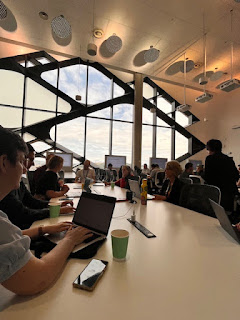
    University of Sheffield staff attending a Engineering Education session

    Crucially, EESW welcomes academics, researchers, GTAs, professional services and technical colleagues. It recognises that improving engineering education and the student experience, is a shared endeavour.

    Seeing the value of time taken out

    Now, when I see EESW in my calendar, I see it very differently.

    I see the benefit of stepping away from routine tasks to think about what I do and how I might do it better. I see how confidence grows when people realise that their experiences and ideas matter. And I see how investing time in staff development feeds directly into stronger teaching, better support services and richer learning for students.

    I also see something else: permission.

    Permission to slow down.
    Permission to reflect.
    Permission to invest in yourself without feeling that you should be doing something else.

    In a sector that often feels pressured and reactive, having structured, protected time like this is not something to take for granted.

    Why I wish more people would give it a try

    If you’ve ever looked at EESW (or Red Line Week, as it once was) and thought, ‘this isn’t for me’, I understand that reaction as I had it too.

    But my experience has taught me that taking time out for personal and professional development isn’t a luxury, it’s a necessity. It sustains good practice and strengthens not only how we work but how we work together.

    Engineering Education Scholarship Week is, at its heart, about people: their ideas, their growth and the space to develop both.

    If you’re curious about what that looks like in practice, here are a couple of highlight videos from past programmes:

    ●      Why Engineering Education Scholarship week and the benefits of attending

    ●      EESW July 2025 Highlights Video

    ●      EESW January 2026 Highlights Video

    And if you’re on the fence next time it appears in your calendar, my advice is simple: draw the red line and see what happens.

    When citing this work, please use the following citation:
    Kenny-Levick, E (2026). “From Red Line Week to Engineering Education Scholarship Week: Why Taking Time Out Matters” Centre for Engineering Education Blog, The University of Sheffield, Sheffield, UK. May 2026. https://ceesheffield.co.uk/2026/10/27/redlineweek/
  • Group-led didactic teaching – is this novel?

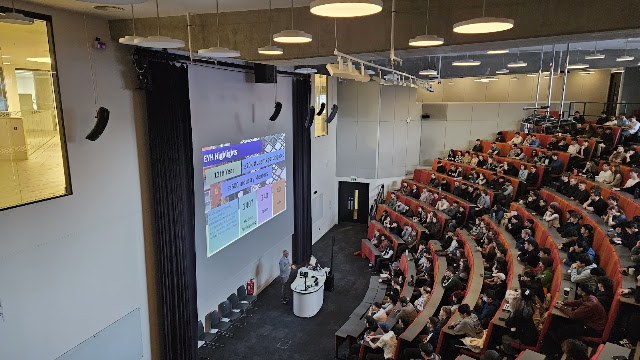
    people in a large lecture theatre

    Have you ever heard of Group-led didactic teaching? What is it? These are questions Professor Andrew Garrard has been considering as he develops the pedagogy behind the Engineering Sheffield ‘Project Weeks’. Called GEC and EYH, they are both core to undergraduate engineering education here at the University of Sheffield, well supported by our industry partners, and provide students the opportunity to develop important engineering skills. If you think you know the answer the questions, check first to see what Andrew thinks.

    The curricula for all our Engineering programmes at the University of Sheffield include “project weeks,” during which approximately 1,500 undergraduate engineering students simultaneously engage with an open-ended design problem.  As we do not have a space large enough for the entire cohort, the students are allocated to multiple teaching areas across the campus. These areas are each staffed for a substantial proportion of the period during which the students are engaged in their work.

    Part of the teaching delivery involves students receiving didactic instruction from staff on defined design methods, such as problem definition and design selection. It is this mode of distributed didactic learning that I am updating. The traditional lecture format, in which academic staff present using pre-prepared slides, is being replaced with a digitally enabled sequence of bite-sized content, steps, and milestones that allows learners to engage with the didactic material independently. This structure is similar to that of a MOOC. However, whereas a MOOC is typically designed for learners working individually and separated physically and temporally from others on the course, this material will be designed for groups working collaboratively. For example, embedded instructions will prompt groups to discuss a topic or to ensure that all members understand a concept before progressing to the next step.

    When exploring the introduction of a new method of learning and teaching, it is standard practice to review previously published literature to understand what has already been attempted and to ensure that any new approach aligns with established best practice. This was my intention when considering an update to the didactic content within the project weeks. However, I have been unable to identify discussion of anything closely aligned with this idea. My search has not been exhaustive, but there comes a point at which the potential value of locating comparable work is outweighed by the time required to uncover it. I suspect part of the problem is not knowing the search terms necessary to uncover appropriate sources.

    This blog post therefore has two aims. First, if any readers are aware of similar published work, I would be grateful to be pointed in the right direction, as collaboration with others exploring related themes is always welcome. Second, if no such work exists, this serves as a way of sharing the concept more broadly.

    If this approach has not been explored before, I will  make the bold claim that I can coin a term for it. After some careful consideration, review of various options, and frustration with ChatGPT “just not getting it,” I’ve settled on:

    Group-Led Didactic Teaching (GLDT)

    The acronym seems to appear primarily in the context of cryptocurrency trading, so with luck there will be minimal overlap—unless, perhaps, one happens to be teaching in a business school. With that noted, let me outline what the term is intended to capture.

    How is GLDT different from other modes of teaching?

    There are well-established methods for delivering didactic teaching. These include synchronous lectures delivered by academic staff and asynchronous lectures, which are usually provided remotely. A range of digital learning approaches also exists, such as massive open online courses (MOOCs), which present taught material in small, self-contained units.

    A synchronous, in-person lecture offers the social benefit of a shared learning experience, but it restricts all students to a single pace of delivery. In contrast, an asynchronous lecture allows learners to engage with the material at a time and speed that suits them, though it lacks opportunities for social interaction. Asynchronous lectures can also be produced quickly as an alternative when in-person teaching is not possible, such as during the COVID-19 pandemic, or to support learners who have missed a session.

    MOOCs use a similar delivery format to asynchronous remote lectures, but they are designed specifically for fully remote learners. They typically provide short, focused segments of content along with multiple in-course milestones or formative assessments.

    My approach to Group-Led Didactic Teaching applies a MOOC-style structure to the design and delivery of content for learners who attend scheduled sessions and work in assigned groups to complete learning tasks. This model combines the social interaction of an in-person, communal lecture with the flexibility for each group to set its own pace. It is also scalable across multiple rooms on campus.

    GLDT differs from a typical tutorial. Tutorials usually do not include tasks designed specifically for groups, and they often focus on problem sets that test the application of knowledge rather than the learning of new didactic content. In addition, learners in tutorials commonly work on different parts of the curriculum and seek help on varying topics, depending on which aspects of the material they are experiencing difficulty. In GLDT sessions, all learners engage with the same material and are expected to achieve the.

    GLDT is a form of group work, which is a widely used teaching method. However, most forms of group work involve student-led or group-led learning for open-ended design challenges, in which students are given a problem brief and follow a process to produce varied, undefined outcomes. For example, in a design project, each student or group develops its own solution to the problem. This approach differs from the delivery of didactic taught material, where all students are expected to reach the same defined learning outcomes.

     Intended learningStaffingPace settingSocial interactionScale up limits
    Synchronous, in person lectureDidactic content1 lecturer per lectureStaffYesTheater size
    Asynchronous remote lectureDidactic content1 lecturer per recordingLearnerNoUnlimited
    MOOCDidactic contentAcademics to design, then reuse.LearnerNoUnlimited
    TutorialsFormative assessmentTeaching assistantsLearnerYes (optionally)Number of Rooms/TAs
    GroupworkOpen ended problemsTeaching assistantsGroupYes (mandatory)Number of Rooms/TAs
    GLDTDidactic contentOptional Teaching assistantsGroupYes (mandatory)Number of Rooms/TAs

    So what do you think? Is it new? Do you do any teaching of this nature? Let us know via Linkedin, we’d love to hear from you about this.

    When citing this work, please use the following citation:

    Garrard, A. (2025). “Group-led didactic teaching – is this novel?”. Centre for Engineering Education Blog, The University of Sheffield, Sheffield, UK. February 2026. https://ceesheffield.co.uk/2026/10/27/group-leddidacticteaching/

  • Laboratory Size and Student Expectations – publishing educational research and the scholarship process

    Laboratory Size and Student Expectations – publishing educational research and the scholarship process

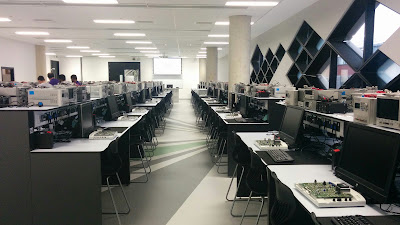
    Electronics and Computer Lab in the diamond building

    The size of a class has impact on learners, learning and the expectations of learners, and recent Centre for Engineering Education publications confirm this to be the case for Lab classes. Here Stephen Beck shares his insight into how to plan and run great lab classes on scale, but also the scholarly process in engineering education, and sometime the answers are at home.

    Many of the experiments that take place in engineering labs have an online alternative assessment which students can complete if they are unable to attend labs. Many courses have labs, but not marks associated with them, so incentives to attend can be low, even though labs form a valuable opportunity for learning and can be integral to the courses. There is great educational value for students who participate in the labs, so we asked the question : Why do students choose to attend labs or skip labs? By finding the answer we could work out how to make them more enticing.

    We used questionnaires to collect data because we have found it to be an effective approach in the past, and used it as an opportunity to ask staff what they thought labs were for.

    Reviewing the literature turned out to be more difficult than I’d assumed; I couldn’t find anything on students NOT attending labs. There were plenty of papers on labs themselves, and a number stating that lab attendance improved student performance [1]. Fortunately, my daughter (who is a social scientist) was at home at the time and when I lamented about not finding anything useful, she suggested that I search for why students DO attend laboratories. Still nothing…so after a further discussion, I looked for literature for why students attend lectures, and this revealed a collection of useful papers [2]. By learning from the educational research in social science, engineering educators have much to gain. In fact, educational research demands many development of new skills to be effective in this research field by most engineers. Engaging with social scientists is therefore vital! In the faculty of Engineering at Sheffield, a route to this expertise (and co-authorship) is via Sarah Plump in Elevate (the University’s learning and teaching educators) and Tim Herrick from the School of Education, particular in the design and analysis of qualitative and quantitative data.

    The literature showed that the main reasons why students don’t attend lectures are: because they are unwell (often hungover), do not think that it is a good use of their time (either they don’t need the learning or they can get it more effectively elsewhere) and that they have other, more pressing, assignments or work to do. Essentially, this is what we found for labs.

    Our research led to interesting insights into student and staff perception of what they thought labs were for. It is clear that staff and students agree on the top two reasons for attending (reinforcing lecture material and the practical experience) (Figure 1). Staff were also asked why they thought students attended labs. Here the top answers were, ‘To get a practical experience’, followed by ‘To get marks’ and ‘Part of any engineering course’ which contrasted with the students with regards to the latter two responses. This mismatch is interesting as staff may not be using reasons that resonate with students to encourage them to attend laboratory sessions. Again the literature shows that Staff encouragement is a key tool in encouraging attendance.

    Graph of student and staff perception of what labs are for

    Additional questions on lab group size and lab duration showed that students like short labs and small groups. At Sheffield, we have been optimising our labs for student learning and experience. Most are now two hours or less. When creating laboratories, it is really important to clarify about what is to be in each experiment and what students will actually get out of them. Do students need to do a lot of repetitions? Can the students do more of the activities outside the actual labs? Student learning and experience is supported by formal prelab preparation that contains theory, introduction to the equipment, and the Health and Safety required. In many cases, with a compulsory introduction taking place outside the laboratory, students can be using the equipment within 5 minutes of the session starting. We have also moved much of the work that students do after the lab away from the valuable laboratory space.

    With the wind in our sails and confidence in the quality of our work we wrote it up into a 10,000 word article that got rejected (very rapidly) by journals on three continents. So, we submitted it to a fourth journal who liked the work, but said it was too long. Rather than reducing the detail in the paper, we decided to split it in two. The first one was on why students attend (or don’t attend) labs which appeared about 6 months ago in the first volume of the new SEFI Journal of Engineering Education Advancement [3] and the second one was based around lab group size and duration which has just appeared in The International Journal of Mechanical Engineering Education, why not have a look at it?

    The main findings here are that generally students like shorter labs and small groups. These can best tied in with another recent publication [4]. Here we looked at lab utilisation and why sharing of labs is a good thing for a variety of reasons (figure 2).

    Figure of how to optimise your resources for better results

    This approach meant that I could produce an equation

    Equation

    D is the lab duration, G the size of the group. This shows that for the same lab use, if we have smaller groups and shorter labs, we can get the same number of students through. According to our research, this should give better student satisfaction.

    So by thinking about student and staff expectation of labs, lab utilisation and planning, you can improve the student experience within the same resource model. Why not try this yourselves?

    When citing this work, please use the following citation:
    Beck, S (2025). “
    Laboratory Size and Student Expectations – publishing educational research and the scholarship process” Centre for Engineering Education Blog, The University of Sheffield, Sheffield, UK. May 2025. https://ceesheffield.co.uk/2026/10/29/laboratory-size-and-student-expectations-publishing-educational-research-and-the-scholarship-process/

    Further Reading

    [1] Greco, E., & Reasoner, J. (2010, June), Student Laboratory Skills And Knowledge Improved Through Individual Lab Participation Paper presented at 2010 Annual Conference & Exposition, Louisville, Kentucky. 10.18260/1-2–16568

    [2] Friedman, Paul, Fred Rodriguez, and Joe McComb. Why students do and do not attend classes: Myths and realities. College teaching 49.4 (2001): 124-133.

    [3] Beck, S., Lazari , P., & DiBenedetti , M. (2024). Why do engineering students attend labs? Staff and student reasons for lab attendance, desired group size and number of laboratories. SEFI Journal of Engineering Education Advancement, 1(1), 26–37. https://doi.org/10.62492/sefijeea.v1i1.17.

    [4] Beck S. On having the right size laboratories. International Journal of Mechanical Engineering Education. 2023;51(2):111-122. doi:10.1177/03064190221142347