Have you ever heard of Group-led didactic teaching? What is it? These are questions Professor Andrew Garrard has been considering as he develops the pedagogy behind the Engineering Sheffield ‘Project Weeks’. Called GEC and EYH, they are both core to undergraduate engineering education here at the University of Sheffield, well supported by our industry partners, and provide students the opportunity to develop important engineering skills. If you think you know the answer the questions, check first to see what Andrew thinks.
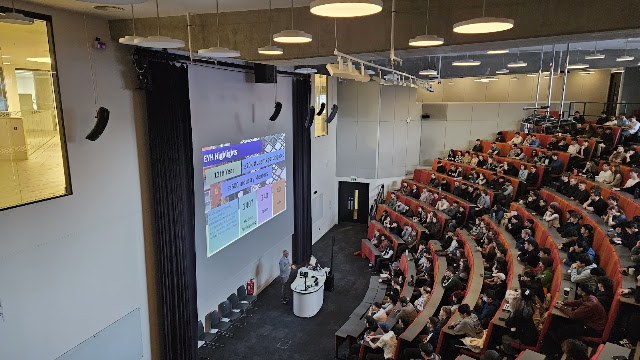
The curricula for all our Engineering programmes at the University of Sheffield include “project weeks,” during which approximately 1,500 undergraduate engineering students simultaneously engage with an open-ended design problem. As we do not have a space large enough for the entire cohort, the students are allocated to multiple teaching areas across the campus. These areas are each staffed for a substantial proportion of the period during which the students are engaged in their work.
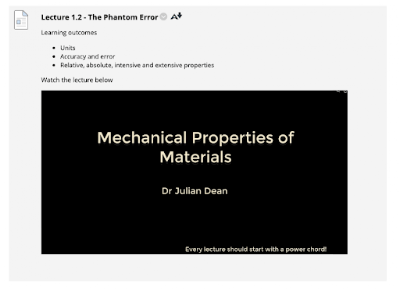
Part of the teaching delivery involves students receiving didactic instruction from staff on defined design methods, such as problem definition and design selection. It is this mode of distributed didactic learning that I am updating. The traditional lecture format, in which academic staff present using pre-prepared slides, is being replaced with a digitally enabled sequence of bite-sized content, steps, and milestones that allows learners to engage with the didactic material independently. This structure is similar to that of a MOOC. However, whereas a MOOC is typically designed for learners working individually and separated physically and temporally from others on the course, this material will be designed for groups working collaboratively. For example, embedded instructions will prompt groups to discuss a topic or to ensure that all members understand a concept before progressing to the next step.
When exploring the introduction of a new method of learning and teaching, it is standard practice to review previously published literature to understand what has already been attempted and to ensure that any new approach aligns with established best practice. This was my intention when considering an update to the didactic content within the project weeks. However, I have been unable to identify discussion of anything closely aligned with this idea. My search has not been exhaustive, but there comes a point at which the potential value of locating comparable work is outweighed by the time required to uncover it. I suspect part of the problem is not knowing the search terms necessary to uncover appropriate sources.
This blog post therefore has two aims. First, if any readers are aware of similar published work, I would be grateful to be pointed in the right direction, as collaboration with others exploring related themes is always welcome. Second, if no such work exists, this serves as a way of sharing the concept more broadly.
If this approach has not been explored before, I will make the bold claim that I can coin a term for it. After some careful consideration, review of various options, and frustration with ChatGPT “just not getting it,” I’ve settled on:
Group-Led Didactic Teaching (GLDT)
The acronym seems to appear primarily in the context of cryptocurrency trading, so with luck there will be minimal overlap—unless, perhaps, one happens to be teaching in a business school. With that noted, let me outline what the term is intended to capture.
How is GLDT different from other modes of teaching?
There are well-established methods for delivering didactic teaching. These include synchronous lectures delivered by academic staff and asynchronous lectures, which are usually provided remotely. A range of digital learning approaches also exists, such as massive open online courses (MOOCs), which present taught material in small, self-contained units.
A synchronous, in-person lecture offers the social benefit of a shared learning experience, but it restricts all students to a single pace of delivery. In contrast, an asynchronous lecture allows learners to engage with the material at a time and speed that suits them, though it lacks opportunities for social interaction. Asynchronous lectures can also be produced quickly as an alternative when in-person teaching is not possible, such as during the COVID-19 pandemic, or to support learners who have missed a session.
MOOCs use a similar delivery format to asynchronous remote lectures, but they are designed specifically for fully remote learners. They typically provide short, focused segments of content along with multiple in-course milestones or formative assessments.
My approach to Group-Led Didactic Teaching applies a MOOC-style structure to the design and delivery of content for learners who attend scheduled sessions and work in assigned groups to complete learning tasks. This model combines the social interaction of an in-person, communal lecture with the flexibility for each group to set its own pace. It is also scalable across multiple rooms on campus.
GLDT differs from a typical tutorial. Tutorials usually do not include tasks designed specifically for groups, and they often focus on problem sets that test the application of knowledge rather than the learning of new didactic content. In addition, learners in tutorials commonly work on different parts of the curriculum and seek help on varying topics, depending on which aspects of the material they are experiencing difficulty. In GLDT sessions, all learners engage with the same material and are expected to achieve the.
GLDT is a form of group work, which is a widely used teaching method. However, most forms of group work involve student-led or group-led learning for open-ended design challenges, in which students are given a problem brief and follow a process to produce varied, undefined outcomes. For example, in a design project, each student or group develops its own solution to the problem. This approach differs from the delivery of didactic taught material, where all students are expected to reach the same defined learning outcomes.
| Intended learning | Staffing | Pace setting | Social interaction | Scale up limits | |
| Synchronous, in person lecture | Didactic content | 1 lecturer per lecture | Staff | Yes | Theater size |
| Asynchronous remote lecture | Didactic content | 1 lecturer per recording | Learner | No | Unlimited |
| MOOC | Didactic content | Academics to design, then reuse. | Learner | No | Unlimited |
| Tutorials | Formative assessment | Teaching assistants | Learner | Yes (optionally) | Number of Rooms/TAs |
| Groupwork | Open ended problems | Teaching assistants | Group | Yes (mandatory) | Number of Rooms/TAs |
| GLDT | Didactic content | Optional Teaching assistants | Group | Yes (mandatory) | Number of Rooms/TAs |
So what do you think? Is it new? Do you do any teaching of this nature? Let us know via Linkedin, we’d love to hear from you about this.
When citing this work, please use the following citation:
Garrard, A. (2025). “Group-led didactic teaching – is this novel?”. Centre for Engineering Education Blog, The University of Sheffield, Sheffield, UK. February 2026. https://ceesheffield.co.uk/2026/10/27/group-leddidacticteaching/