Tag: The Diamond Building

  • Innovation in Engineering Education – The Diamond – Twelve Architects

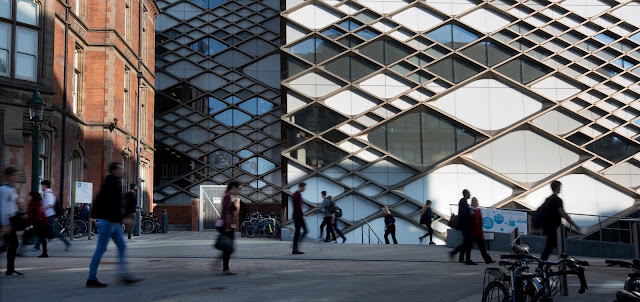
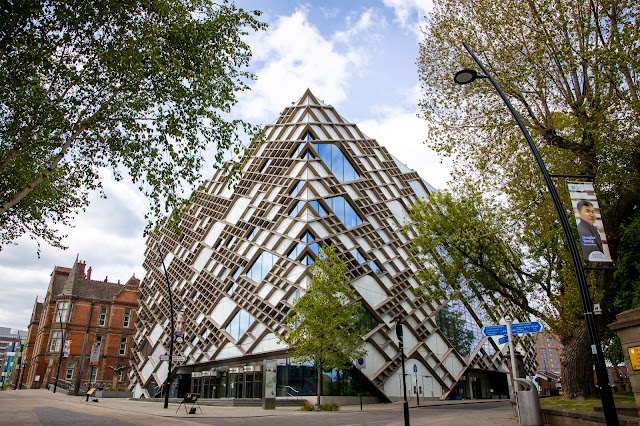
    Exterior of the diamond building

    The conception of the Diamond Building was a huge project here at Sheffield Engineering that aimed to make a world leading space for Engineering teaching. It is the home of  high quality teaching labs for all the engineering disciplines, as well as innovative teaching and study space. It is a wonderful space to be in and remains as popular as ever with students. The building led to the creation of a specialist multidisciplinary team to deliver and coordinate the teaching that takes place in it, and they continue to lead innovation in teaching and learning and are core contributors to the Centre for Engineering Education. This wouldn’t have been possible without the team who built the Diamond, Twelve Architects. They made the space both iconic and great for teaching, something that is often overlooked, but that has a huge impact on learning and learners. In this post Twelve Architects share their perspective of the project.
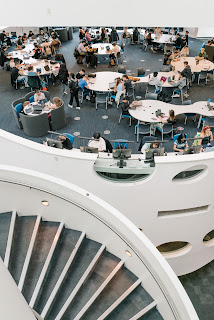
    study space in the diamond building

    September 2025 marked ten years since the opening of The Diamond at the University of Sheffield, a landmark project that continues to inspire over a decade on. As our first completed UK building, The Diamond was a defining moment for Twelve Architects, setting the tone for our approach to design, collaboration and innovation.

    Reflecting on this milestone, we asked members of the original design team, Matt Cartwright and Lorraine Stoutt Griffith, to share their experiences of working on the building that helped to shape our future as a practice.

    Designed to transform the way engineering was taught at the University, The Diamond brings together multiple disciplines under one roof, creating a flexible, future-focused environment that encourages interaction, learning and discovery. Ten years later, the building remains one of the UK’s most advanced teaching and research facilities, and one we’re immensely proud to have worked on.

    “The atrium remains one of the building’s most uplifting surprises,” recalls Lorraine. “It’s open, light and full of character, with a variety of places to spend time or work. We painted the steel structure orange to reveal how the building works. It’s a detail that makes it particularly special for the structural engineers who use it.”

    Behind the building’s confidence lies the complexity of its delivery. From the organically shaped windows to the curved pod walls, every detail required careful coordination. “It wasn’t without its challenges,” says Lorraine, “but the ambition and commitment across the team made it possible. Seeing it now, still thriving and crowded with students, makes it all worthwhile. It set a great standard for the student experience.”

    For Matt, the project carries a deep personal significance. “The vision was to create a landmark building that would attract students and staff, and support the University in becoming one of the leading engineering faculties in the UK and internationally,” he reflects. “The project was founded on trust, hard work and a collective desire to succeed. When challenges arose, we found solutions together, a rarity that shaped my belief in the power of collaboration.”

    Years later, The Diamond remains one of the UK’s most advanced and well-used engineering facilities, a space that is both functional and inspiring. Matt adds. “My parents met as students at the University of Sheffield. To have designed a building that continues to inspire future generations is priceless.”
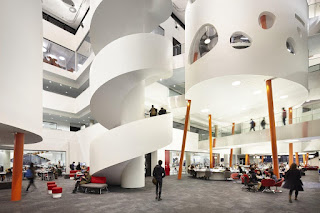
    spiral staircase in the diamond building

    Looking back, both Lorraine and Matt agree that The Diamond exemplifies the values that continue to guide Twelve’s work today: trust, ambition, quality and collective strength.

    “Be ambitious,” says Lorraine. “Bring the team with you, client, users, engineers, contractors, and maintain the quality of materials. It was a struggle to keep the cladding anodised, but seeing it now, it was absolutely the right decision.”

    “Trust, ambition and a clear vision,” echoes Matt, “are the lessons that we have carried through to every project since.”

    The Diamond continues to stand as a testament to design excellence, innovation and collaboration, and as a project that will always hold a special place in our hearts.

    When citing this work, please use the following citation:

    Hearne, B. (2025). “Ten Years of The Diamond – Twelve Architects”. Centre for Engineering Education Blog, The University of Sheffield, Sheffield, UK. January 2026. https://ceesheffield.co.uk/2026/10/27/innovationinengineeringeducation/
  • Celebrating over a Decade of Impact at The Diamond

    In this reflective piece, Sophie Barwick takes us through the special 10-year celebration of the Diamond building —now firmly established as the heart of engineering education at the University of Sheffield. From cutting-edge labs and inspiring staff, to the student-driven innovation of the iForge, Sophie shares how the Diamond has shaped her journey as both a student and GTA. Her insight captures the building’s enduring purpose: a space built for students, enriched by community, collaboration, and hands-on learning.

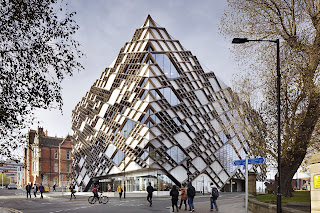
    Exterior of the diamond building

    Back in October 2025, the Diamond opened its doors to staff, students, alumni and visitors to celebrate 10 years of the Diamond building. Over this time the Diamond building has become a fundamental place for the education of thousands of engineering students at the University of Sheffield. The range of state of the facilities, enthusiastic staff and open study spaces make it a great place to learn and develop skills.

    The Diamond building offers a range of laboratories and lecture theatres to teach students engineering concepts from across all disciplines under one roof, marking it as the flagship teaching facility for the faculty. It therefore also enables students to have a base to explore new concepts and work together, particular crucial for those new to university and Sheffield.

    In addition to timetabled teaching, key part of the student experience in the diamond is the iForge – the UK’s first student-led makerspace. This facility allows both engineering and students from across the university to make their ideas reality while learning practical skills and, for those selected as iForge representatives, an opportunity to develop their teaching and leadership skills as well.

    Staff from a range of academic and industrial backgrounds form a team of teaching and support staff within the department of Multidisciplinary Engineering Education which is supportive, encouraging and enthusiastic about engineering education. The staff, primarily based in laboratories, teach students from a range of engineering disciplines and levels of study with the support and guidance relevant for their background. They also work throughout the year adapting lab activities to ensure they align with module content and current technologies.

    The Faculty of Engineering are able to offer and teach the activities to so many students in the diamond thanks to the assistance of graduate teaching assistants (GTAs). Often graduates from undergraduate courses at the University of Sheffield themselves, GTAs are current PhD students with expertise to help and guide students in each of the laboratories, increasing the staff to student ratio, and therefore better supporting the students.

    I was honoured to be invited as a guest on the “Student Experience” panel for the Decade of the Diamond celebration event. The Diamond building, and the facilities within it, have been fundamental to my development during my time at the University of Sheffield and it was great to be able to offer insight into my experience in as both a student and GTA in the Faculty of Engineering, University of Sheffield.

    It’s fantastic to see the student voice continue to be so actively involved in the continued evolution of the Diamond. After all, as Professor Stephen Beck said “the Diamond is and always was a building designed for the students”.

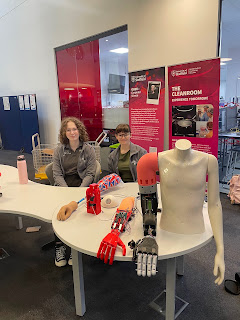
    Robotic arm on an exhibition stand

    In addition to the student voice session, the celebration event heard from many speakers key to the development of the Diamond building and the teaching within it, including the original architects from Twelve Architects,

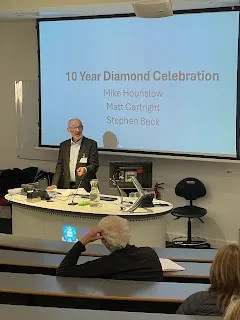
    Mike Hounslow delivering an opening address

    Professor Stephen Beck, the founding Head of Multidisciplinary Engineering Education, and Professor Emeritus Mike Hounslow, Pro Vice-Chancellor for Engineering during the construction. They reflected on the development of the Diamond from its original conception to how to it is still developing today.

    Sir John Lazar CBE FREng, president of the Royal Academy of Engineering, and representatives from across industry offered insight into how the Diamond building develops well-rounded engineering graduates, equipped with the skills they need for their future careers.

    Sir John Lazar CBE FREng, president of the Royal Academy of Engineering, and representatives from across industry offered insight into how the Diamond building develops well-rounded engineering graduates, equipped with the skills they need for their future careers.

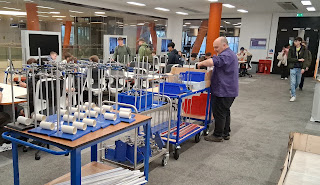
    Throughout the day, in the Moonscape study area, there was stalls displaying the fantastic work of both the diamond laboratories and each of the schools in the faculty of engineering. There were also talks from many of the schools reflecting on the opportunities they offer students, with particular focus on inclusivity and accessible research and learning tools.

    The day also allowed for many opportunities to network with members of current and previous staff who have helped shape MEE, as well as those crucial in the realisation of the Diamond building itself.

    Many thanks to Harry Day, Emma Kenny-Levick, Andrew Garrard, and all involved in organising the event – I look forward to the next one!

    When citing this work, please use the following citation:

    Barwick, S. (2025). “Celebrating a Decade of Impact at The Diamond”. Centre for Engineering Education Blog, The University of Sheffield, Sheffield, UK. January 2026. https://ceesheffield.co.uk/2026/10/27/celebratingimpact/

  • Scaling Up Practical Engineering Labs for Teaching Spaces

    Thermodynamic lab in the diamond building

    Efficiency in engineering education is important for managing large cohorts and can be successful as long as the key metric is quality. Dave Brown, Rob Woolley and Andrew Garrard demonstrated how to do it, by scaling up and delivering a fundamental thermodynamics practical class for a large, non-specialist teaching space, with larger cohorts and with fewer sessions. Here, they share the secret to reducing staff time, improving flexibility, and creating a lively learning environment, with good student experience at the core.

    At Sheffield, we use innovative approaches to deliver practical teaching, such as workshop and laboratory classes, at scale. We aim to provide as much hands-on learning as possible. There are, however, limits to what we can offer. These limits may arise from timetable constraints, staff availability, or the amount of laboratory space.

    One way to overcome constraints on laboratory space, make the best use of staff time, and simplify student timetables is to teach fewer lab sessions to larger cohorts in suitable teaching spaces. Laboratory rooms are often smaller and more specialised than general flat teaching spaces, so this opens up the question of whether certain laboratory activities can be scaled up by running them in large, non-specialist rooms. For an activity to be suitable for scale-up, the equipment needs to be:

    ●     inexpensive enough to provide multiple sets

    ●     portable enough to be packed and transported

    ●     simple enough for students to set up and take down themselves

    ●     unlikely to cause mess or damage to the teaching space

    Case Study:

    Wind tunnel

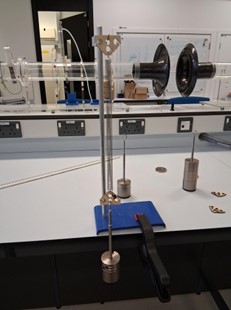
    In the thermodynamics laboratory, a 2nd-year exercise for Aerospace Engineering students involves investigating natural frequency using springs, masses, a ruler, and their phones as stopwatches. The session is open-ended: students decide the procedure within a clear aim, a loose brief, and examples of how to use the equipment.

    The equipment is normally prepared in advance so it is ready for students upon arrival. Previously, this activity ran seven times for 260 students in groups of 40, each session lasting 1.5 hours. This required 10.5 hours of contact time, plus seven rounds of setup and preparation.

    In the 25/26 academic year, this activity was scaled up and delivered in a flat teaching space with a capacity of 200. It ran twice, each time with 130 students working simultaneously (and the approach would permit up to 400 students without additional timetable demands).

    Observations

    To make the larger sessions manageable, students need to take greater responsibility for setting up and taking down the equipment, rather than relying on technical staff to do this in advance. While this requires clear instructions and uses some of the students’ learning time, it also increases students’ ownership of their experiment.

    There is also a noticeable increase in the energy of the environment. Smaller sessions can feel “flat”, but with over 100 students working on an activity in a single space, there is a strong “buzz” throughout the room.

    When running at this scale, careful consideration is needed when planning the degree of “scaffolding” provided to students. For efficiency, questions asked by students or common mistakes they can make can be anticipated and mitigated in the teaching material. For learning, it can be beneficial to engineer the session procedural speedbumps, to force students to consider what they are doing, why they are doing it and to initiate a conversation with lab staff. Addressing this tension is a delicate balancing act.

    The increased number of students in a single space will increase the possibility of students who have ASDs (diagnosed or not) becoming overwhelmed or having self-regulation issues that will impact their ability to engage with the lab activity or require them to leave. This would highlight the need to limit the number of students, so the extraneous cognitive load is kept to a manageable level.

    Finally, the model was shown to be more efficient in terms of GTA utilisation: not only were fewer GTA hours required, but it also allows for greater flexibility. With multiple small sessions, some groups will include students who need more support than others, leading to some sessions having sufficient GTA resources and others not enough. By combining students into a smaller number of sessions, these differences can be smoothed.

    When citing this work, please use the following citation:

    Garrard, A. Woolley, R. Brown, D. (2025). “Scaling Up Practical Engineering Labs for Teaching Spaces”. Centre for Engineering Education Blog, The University of Sheffield, Sheffield, UK. December 2025. https://ceesheffield.co.uk/2026/10/27/scalinguppracticalengineering/

  • A Cathedral to Engineering Education: The Diamond Building

    A Cathedral to Engineering Education: The Diamond Building

    Exterior of the diamond building

    Twelve Architects, who worked closely with engineers and University of Sheffield stakeholders to design and deliver The Diamond building, have taken the opportunity to reflect on what The Diamond has become and what it has meant to those who use it.

    More than a decade after its completion, The Diamond at the University of Sheffield continues to stand as a symbol of innovation in engineering education, and a career-defining project for many of those involved in its creation. As part of our ten year celebration, we asked members of the original client team to share their reflections on the building.
    For

    Stephen Beck, Professor of Mechanical Engineering at the University of Sheffield, The Diamond has had a profound and measurable impact on the Faculty and its students.

    “It has allowed us to double the size of the student cohort and helped position us as leaders in engineering education,” he reflects. “I show visitors around and say, ‘This is the best practical education environment in the world’ and I’ve never been contradicted.”

    From the outset, the design of The Diamond encouraged collaboration and cross-disciplinary learning, creating spaces that inspire both staff and students. Stephen Beck describes the experience of being part of the project as deeply rewarding: “It was great to be part of a team where each member used their skills to deliver a world-leading facility for engineering education. It’s certainly been a high point of my career. Truly career defining.”

    “It is a cathedral to engineering education”

    Professor Mike Hounslow, former Pro-Vice-Chancellor for Engineering at the University and often described as the “father of the project”, recalls how the building has shaped the University’s academic landscape: “We’ve seen growth in student numbers, an improvement in the student experience and a rise in educational aspiration,” he explains. “The building encouraged student-led activity and created a culture of openness and innovation. It’s a cathedral to engineering education.”
    Reflecting on the decade since its opening, he adds: “Its impact has only become more positive over time. It’s an iconic, open, and practical space that continues to define what engineering education can be.”

    “The building of choice”

    For Keith Lilley, former Director of Estates at the University, The Diamond has always been “the building of choice”. “The building was full from day one,” he recalls. “It immediately became the go-to place for student study, so popular that the growth plan was realised straight away.”

    Despite challenges during planning and construction, he describes the project as having a “lasting legacy”. “The Diamond was hard won, with planning hurdles and construction challenges, but it proved to be the most popular building with students. It undoubtedly contributed to the success of the Faculty of Engineering as a whole and remains a premium facility in UK higher education.”

    Today, The Diamond continues to feature prominently in the University’s promotional material, celebrated as a defining space for learning and collaboration. “It’s incredible,” he adds. “The building remains a lasting legacy, not only for the University but for everyone who worked on it.”

    A decade after its opening, The Diamond continues to embody the ambition and collaboration that brought it to life. Its success has paved the way for new approaches to education, inspiring similar developments across the UK and beyond.

    When citing this work, please use the following citation:

    Hearne, B. (2025). “A Cathedral to Engineering Education: The Diamond Building 10 Years”. Centre for Engineering Education Blog, The University of Sheffield, Sheffield, UK. December 2025. https://ceesheffield.co.uk/2025/02/16/a-cathedral-to-engineering-education-the-diamond-building/